
Today's Source
Monday, June 15, 2026
Field sizes in Washington and Colorado House races are approaching historical highs, suggesting elevated primary competition within both parties ahead of the August filing deadlines and general election season. Washington's 69 candidates across 10 districts marks the second-most since 2014, while Colorado will hold seven contested House primaries—also the second-highest total in that period. These candidate counts signal organizational activity and potential incumbent vulnerability assessments within Democratic and Republican strategists' planning.
Washington House Races: Elevated Candidate Field
Washington's 2026 House races attracted 69 candidates split across 29 Democrats, 20 Republicans, 16 minor-party candidates, and four independents. The average of 6.9 candidates per district in the state's 10 seats reflects competitive primary dynamics and indicates that both major parties are fielding multiple contenders in at least some districts. The candidate field size does not clarify which districts face the most contested primaries or whether incumbents are facing primary challenges, limiting current assessment of whether this activity reflects strength-building or defensive positioning.
Colorado House Primaries: Democratic and Republican Activity
Colorado will conduct seven contested House primaries in 2026—five on the Democratic side and two among Republicans. The number represents an increase from six contested primaries in 2024, indicating sustained primary competition across both parties heading into the general election. The specific districts and candidate matchups remain the key variable for determining whether this activity concentrates in swing seats, safely held districts, or both.
Polls
Generic Ballot: Democratic Lead Widens in Recent Surveys
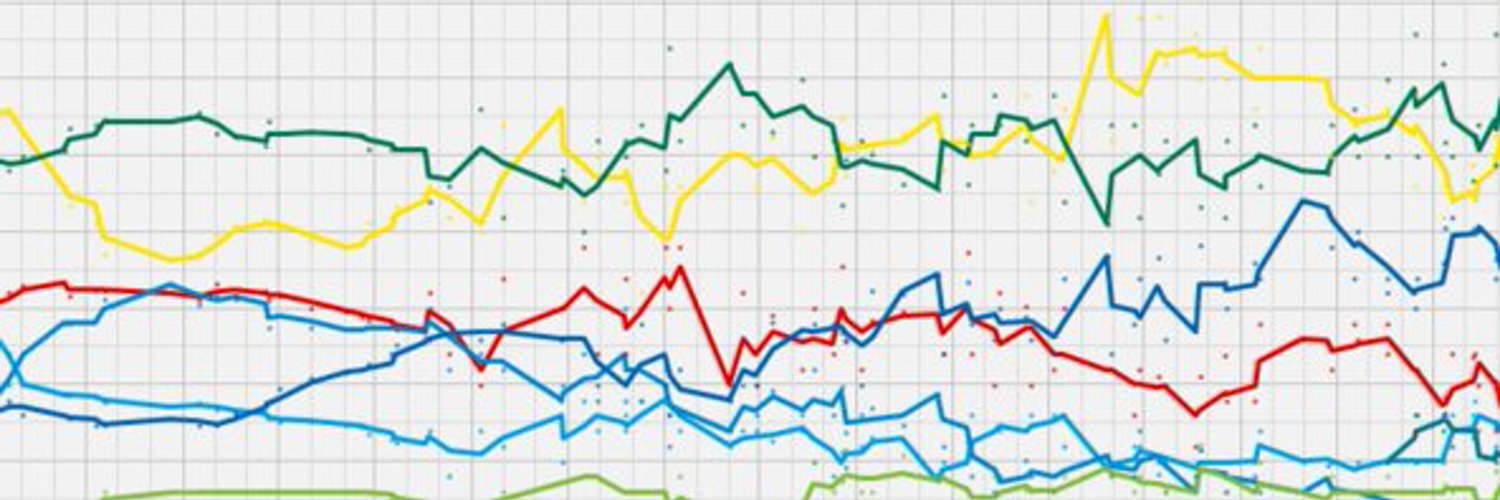
Recent generic ballot polling shows Democrats maintaining a consistent advantage over Republicans heading into the 2026 midterms. Nine surveys conducted between June 1-8 reveal a Democratic lead ranging from 4 to 10 percentage points. The Economist/YouGov poll (June 8) shows Democrats at 45 percent versus Republicans at 41 percent, while Emerson's survey puts the gap wider at 50-40. Most other recent polls cluster Democrats between 46-49 percent, suggesting the party maintains momentum in the generic preference metric.
The consistency across pollsters is noteworthy. Even Forbes/HarrisX, which shows the narrowest gap at 46-45, still favors Democrats. The Reuters/Ipsos survey with the largest sample size (4,531) registers a 4-point Democratic advantage. These figures represent a significant shift from typical midterm historical patterns, where the party holding the presidency typically faces headwinds.
Ohio Senate: Brown Maintains Double-Digit Edge
Sherrod Brown (D OH-SEN) leads Bernie Moreno (R OH-SEN) by 8 points in a FOX News survey conducted through June 1, with Brown at 53 percent and Moreno at 45 percent. This represents a substantial advantage for the Democratic incumbent in a state that has trended Republican in recent cycles.
Follow the Money
Florida Senate Race: Financial Asymmetry in Likely Republican Seat
Joshua Weil (D FL-SEN) has raised the most money in the race at $15.9 million but exhausted his entire war chest, leaving zero cash on hand. Alexander Vindman (D FL-SEN) raised $8.2 million and retains $6.4 million in reserves. By contrast, Ashley Moody (R FL-SEN) raised only $8.4 million but has spent minimally—just $1.3 million—and holds $7.1 million cash on hand. The Republican incumbent maintains a substantial financial cushion despite lower total receipts.
Weil's complete spend-down suggests a candidate operating under urgency, possibly attempting maximum saturation in a competitive primary or early general phase. Vindman's retained reserves indicate a more measured approach, preserving resources for closing periods. Moody's minimal spending despite adequate funding signals confidence in her positioning; she can activate substantial resources on demand if the race tightens.
The remaining Democratic candidates—Mujica, Jenkins, Nixon, Grayson, and minor candidates—collectively raised under $1.2 million and are effectively non-factors financially. In a race rated Likely Republican, the cash-on-hand advantage rests with the GOP nominee.
Headlines
- Sixty-nine candidates are running for Washington’s 10 U.S. House districts — the second-most since 2014 (Ballotpedia News)
Washington's 2026 U.S. House races attracted 69 candidates across 10 districts, marking the second-highest number of ... - Seven U.S. House primaries are contested in Colorado this year — the second-most since 2014 (Ballotpedia News)
Colorado will hold seven contested U.S. House primaries in 2026, marking the second-highest number since 2014. The br...
What to Watch
Arizona House Races: Two Tossups in Play
Arizona's 1st District and Arizona's 6th District remain unresolved tossups according to Cook Political Report. Both districts will be critical indicators of whether Democrats can hold suburban gains made in recent cycles or if Republicans can recapture traditionally competitive territory. Monitor final polling and turnout modeling in these districts closely.
California's Competitive Landscape
CA-13 and CA-22 are rated tossups by Cook Political Report, while CA-45 and CA-47 lean Republican according to Inside Elections and Cook Political Report respectively. These four districts will test whether Democratic performance in California's coastal and interior regions has shifted. Results will signal broader patterns in purple suburban areas nationally.
Senate Races in Swing States
Georgia's Senate race is rated lean Democratic by Cook Political Report, while Florida's Senate race is likely Republican per Sabato's Crystal Ball. The Georgia race remains the most volatile Senate contest and carries outsized weight for chamber control projections. Monitor early voting data and demographic performance metrics in both states as indicators of statewide momentum.
How was today's briefing?
Get this briefing in your inbox every morning
Free. No password required. Unsubscribe anytime.